Friday, June 08, 2018
Is the 1991 Nikon F601 film SLR camera relevant in 2018?
It's been a while since I held a digital single lens reflex camera in my hands, much less a film SLR camera. My dad had an old Nikon F601 tucked away in the wardrobe. Its big, cumbersome and heavy. But it does feel comfortable and solid in my hands. Today, this camera is 27 years old and has a kit lens of 28-70mm (f/3.5-f/4.5) that is still considered a versatile range for most scenarios.
When I unzipped the camera from its awkwardly shaped camera case, I realised that the switch was left in the 'on' position and I was probably the last person to fiddle with it during my Junior Collage days which was more than 10 years ago. It goes without saying that the battery was drained of every ounce of energy and was completely dead.
Battery
Thankfully, it was a lithium battery and unlike alkaline or carbon zinc batteries, lithium batteries don't leak no matter how drained they are. Yes, it was a non-rechargeable lithium battery. The battery size is an odd CR-P2 or 223. The reason for its odd shape wasn't because of any special battery making technique but because it was actually made up of two less uncommon CR123A cells soldered together to give 6V. Lucky for me, the CR-P2 battery is still in production, albeit expensive at a whopping SG$14 a piece.
Thankfully for taobao, I got a random branded CR-P2 for SGD4.5. At this price, it was cheaper than what I remembered 10 years ago! I won't expect too much capacity out of this battery but at least it does have a respectable voltage.
Film
35mm film in Singapore is ridiculously expensive (a basic Fujifilm c200 colour film cost $8.90 and that was exclusive of processing. The same film from taobao is a nostalgia inducing SG$3.5 - exactly the same price as I remembered it to be if purchased as part of a 3-roll pack ten years ago.
I do hope to shoot more types of film, but maybe I starting off with cheap films like the Fujifilm c200 would be good.
You know that film is pretty much alive in the digital city of Singapore when there is a vibrant facebook group Let's Shoot Film SG dedicated to film photography. I am glad to find other like-minded film enthusiasts and to know how they enjoy their film.
One of the drawbacks of shooting film is that the cost can add up quickly. Paying to print or scan a roll of film will make up the majority of the expenses for enjoying film photography. Nevertheless, I find it exquisite to shoot in film and the fact that it is expensive makes me want to craft my shot more meticulously before pressing the shutter.
C-41 Processing: $3.50
Processing + Scanning: $10
Processing + 4R prints: $3.50 + (36prints x $0.35) = $16.10
Problems
As with technology, some parts of the camera did not age well.
1) Main LCD panel was completely blank. Simple info like number of pictures taken and the current mode cannot be viewed. Thankfully, some essential info were projected in the viewfinder. Repairing this would bring back most of the camera's usability. But I wonder if it is worth it.
2) Film cover hinge broke. Apparently, this was a common issue with the F601 as the hinge was plastic. Over time, it became brittle and broke. While I could get it fixed, it is a low priority issue as it could be easily sidestepped with some cheap gaffer tape.
3) The last problem was due to the lens, rather than the camera itself. The kit lens' aperture lever no longer springs back to the highest f stop, meaning that it is always on its biggest aperture setting all the time. I recently saw a a youtuber doing a full teardown of a camera lens. I have a sneaky suspicion that a spring is dislodged and probably need not open the lens a great deal in order to fix it myself. Maybe I will do this some time!
So is the Nikon F601 still relevant?
Feature wise, it has all the features that I needed from an SLR camera. Sure, it has a slow continuous shooting rate of 2.5fps, but I doubt I will ever use that for shooting film.
All the manual features are easily accessible via the single jog dial and it is a joy to shoot with it, as expected from an SLR camera.
The most important things are the consumables that the camera requires. Namely, the battery and film. These two can, fortunately, be obtained at a reasonable price even at this day and age.
I think film cameras offer a possibility to go back to a time when things moved slower and encouraged us to slow down and put some thought into the picture want to capture instead of simply shooting directly to social media. The F601 that was hiding in the wardrobe the entire time certainly serves this purpose very well.
Having a lens that is capable of larger apertures compared to point-and-shoots and camera phones does help with creating creamy blurry background otherwise known affectionately by photographers as bokeh. This makes the pictures taken from this old camera far more special and allows me to craft my picture in a more refined manner.
I was pleasantly surprised to see how the pictures turned out. The meter was spot on and the colours are cool but still quite accurate. I do think that I have to work on my manual focusing and my hand holding techniques for darker scenes. But that is a story for another time.
Sunday, April 29, 2018
5 tips and tricks to Improve your Instax Mini Photography
Hi everyone!
It has been a while since my last post. I have been stuffed with work the past year and haven't been blogging as much as I liked.
I recently got back into photography, particularly instant photography with Fujifilm's Instax Mini format. In this post, I want to share with you 5 tips and tricks that I have picked up along the way that had enhanced my experience of using the instant film, hopefully it will be useful to you as well.
1: Cost of Instax Film
First, the cost of film is expensive. When I first got my Instax Mini 7s, I think I shot about 6 packs of film before I decided that it was too expensive to continue shooting with this camera.
I really liked using the 7s. It is a fun camera but my wallet didn’t agree with it. In Singapore, it costs SG$13.90 for a pack of 10 photos at Harvey Norman and its quite an indulgence, man. Thankfully, globalisation happened and now it is feasible to buy Instax film from all around the world.
The prices on Taobao and Amazon are pretty acceptable if you buy in bulk of about 20 pieces and above. At the time of my purchase in 2018, it worked out to about SG$7.50 to SG$8 for a pack of film. This is almost half the local price!
If are thinking of experimenting with your photos and don't mind using expired film, you can head over to Carousell try to get some. And of course, don't over pay for these. I paid SG$4.90 for a pack of film that was expired 7 months ago. So far, I haven't found any noticeable difference between expired film and fresh film.
2: Keep your Instax Photos Scratch Free On The Go
The next problem stems from its strength as an instant film. So, you just took a picture, its in your hands, then where do you keep it? These Instax films are fairly easy to scratch and its the only picture you have. How then? Buy Instax albums and bring along? That works too, but Instax albums tend to be fanciful and huge.
Not to mention, anything that gets slapped with the Instax trademark instantly (heh heh) increases in price. Luckily for us, Instax Mini film is exactly the same size as a name card. And no one ever buys name card folders so they tend to be very cheap. I got myself a small one that holds 40 pieces that I keep in my pocket to keep my precious pictures scratch free.
3: Sharing your Pictures
Third, people say that sharing is caring but Instax film not cheap. Its really precious! If u have 10 friends you want to share a photo with, it is really not feasible to take the same picture 10 times to have 10 copies. Normally, I would take the picture home, scan it and share on social media. But this takes away a bit of the magic of instant photography especially when you are overseas and u really want to give a picture to the kid from an indigenous tribe 1000s of miles from civilisation.
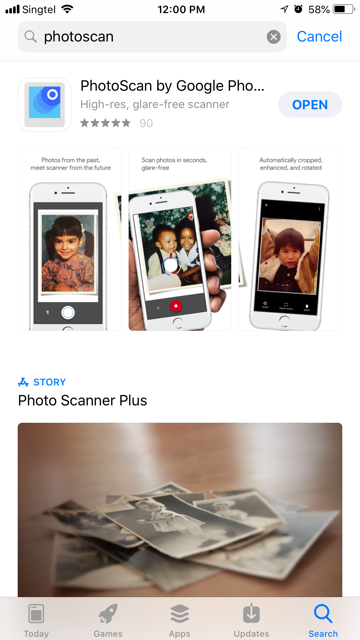
For this issue, I should say that there is an app for that. Introducing google’s Photoscan. Its a clever app that combines several photos to remove the glare from glossy pictures. You first take a full shot of the picture and then position the centre of the camera to the 4 circles of the picture. The app will then sort out the glare and the end result is as good as a proper scan. The quality of the picture is clearer and more vibrant when this is done under bright light. Digitize your pictures before you give the original away!
4: Exposing Instax Film Correctly
Forth, after trying Instax film for a while, I find that the film is surprisingly unforgiving. Its easy to end up with pictures that are too dark or too bright. When this happens, the Instax film loses a detail when its over or under exposed.
The only 4 settings available on the camera
So, it is really important to make sure that the scene that you are capturing does not have too much variation in brightness. If you can't help taking pictures under such conditions, you need to match the aperture to the brightness of your subject instead of the general brightness of the scene. This way, your subject be properly exposed. This is way harder than it sounds and takes a lot of practice to guess the correct setting to use.
Top view of my Instax Mini 7s with the aperture adjustment knob on the right
Also, if you are taking pictures of people, try to position them side by side instead of front and back. This is to make sure that the camera’s flash lights up everybody's faces evenly. Otherwise, the people nearer to the camera will be too bright, the middle will be ok but the furthest faces will be too dark.
5: Adjust your Flash Output
My fifth tip is regarding taking close ups. My Instax 7s camera has a minimum focus distance of 0.6m. But the flash is far too bright that distance when using the indoor setting. Owners of the Instax 7s would know that there is no way to control the power of the flash nor switch it off.

A little piece of plastic over the flash to soften the flash
One way to 'adjust' the output of the flash is to tape a small piece of white paper or translucent plastic onto the flash to diffuse the light. I taped only the top part of the plastic sheet so that I can flip it away from the flash whenever I need full power and I do not have to remove the plastic sheet completely. You might have to experiment with different thickness of plastic to get the desired effect.

Full power mode!
It is also possible to reduce the effective range of the flash by choosing a smaller aperture setting but this would mean that the background will become very dark. I do this sometimes to isolate my subjects so that they stand out in the picture.
Final Thoughts
That's all the tips I have gathered so far. I think the Instax film is a challenging film to work with but if you do get it right, this film rewards you with beautiful colours and I hope you will come to enjoy instant photography as I have.
Let me know what you think about instant photography and if you have some Instax related tips and tricks up your sleeves, do share them in the comments below. Thank you for reading!
It has been a while since my last post. I have been stuffed with work the past year and haven't been blogging as much as I liked.
I recently got back into photography, particularly instant photography with Fujifilm's Instax Mini format. In this post, I want to share with you 5 tips and tricks that I have picked up along the way that had enhanced my experience of using the instant film, hopefully it will be useful to you as well.
1: Cost of Instax Film
First, the cost of film is expensive. When I first got my Instax Mini 7s, I think I shot about 6 packs of film before I decided that it was too expensive to continue shooting with this camera.
I really liked using the 7s. It is a fun camera but my wallet didn’t agree with it. In Singapore, it costs SG$13.90 for a pack of 10 photos at Harvey Norman and its quite an indulgence, man. Thankfully, globalisation happened and now it is feasible to buy Instax film from all around the world.
The prices on Taobao and Amazon are pretty acceptable if you buy in bulk of about 20 pieces and above. At the time of my purchase in 2018, it worked out to about SG$7.50 to SG$8 for a pack of film. This is almost half the local price!
If are thinking of experimenting with your photos and don't mind using expired film, you can head over to Carousell try to get some. And of course, don't over pay for these. I paid SG$4.90 for a pack of film that was expired 7 months ago. So far, I haven't found any noticeable difference between expired film and fresh film.
Expired films with fanciful borders on the cheap!
2: Keep your Instax Photos Scratch Free On The Go
The next problem stems from its strength as an instant film. So, you just took a picture, its in your hands, then where do you keep it? These Instax films are fairly easy to scratch and its the only picture you have. How then? Buy Instax albums and bring along? That works too, but Instax albums tend to be fanciful and huge.
Inconspicuous name card holder
Not to mention, anything that gets slapped with the Instax trademark instantly (heh heh) increases in price. Luckily for us, Instax Mini film is exactly the same size as a name card. And no one ever buys name card folders so they tend to be very cheap. I got myself a small one that holds 40 pieces that I keep in my pocket to keep my precious pictures scratch free.
Shh... it is actually my Instax album
3: Sharing your Pictures
Third, people say that sharing is caring but Instax film not cheap. Its really precious! If u have 10 friends you want to share a photo with, it is really not feasible to take the same picture 10 times to have 10 copies. Normally, I would take the picture home, scan it and share on social media. But this takes away a bit of the magic of instant photography especially when you are overseas and u really want to give a picture to the kid from an indigenous tribe 1000s of miles from civilisation.
Photo scan via Google's Photoscan (the quality in this blog is not representative of the actual quality of the scan because it is heavily compressed here)
For this issue, I should say that there is an app for that. Introducing google’s Photoscan. Its a clever app that combines several photos to remove the glare from glossy pictures. You first take a full shot of the picture and then position the centre of the camera to the 4 circles of the picture. The app will then sort out the glare and the end result is as good as a proper scan. The quality of the picture is clearer and more vibrant when this is done under bright light. Digitize your pictures before you give the original away!
Google's little known app - Photoscan
4: Exposing Instax Film Correctly
Forth, after trying Instax film for a while, I find that the film is surprisingly unforgiving. Its easy to end up with pictures that are too dark or too bright. When this happens, the Instax film loses a detail when its over or under exposed.
The only 4 settings available on the camera
So, it is really important to make sure that the scene that you are capturing does not have too much variation in brightness. If you can't help taking pictures under such conditions, you need to match the aperture to the brightness of your subject instead of the general brightness of the scene. This way, your subject be properly exposed. This is way harder than it sounds and takes a lot of practice to guess the correct setting to use.
Top view of my Instax Mini 7s with the aperture adjustment knob on the right
Also, if you are taking pictures of people, try to position them side by side instead of front and back. This is to make sure that the camera’s flash lights up everybody's faces evenly. Otherwise, the people nearer to the camera will be too bright, the middle will be ok but the furthest faces will be too dark.
5: Adjust your Flash Output
My fifth tip is regarding taking close ups. My Instax 7s camera has a minimum focus distance of 0.6m. But the flash is far too bright that distance when using the indoor setting. Owners of the Instax 7s would know that there is no way to control the power of the flash nor switch it off.
A little piece of plastic over the flash to soften the flash
One way to 'adjust' the output of the flash is to tape a small piece of white paper or translucent plastic onto the flash to diffuse the light. I taped only the top part of the plastic sheet so that I can flip it away from the flash whenever I need full power and I do not have to remove the plastic sheet completely. You might have to experiment with different thickness of plastic to get the desired effect.
Full power mode!
It is also possible to reduce the effective range of the flash by choosing a smaller aperture setting but this would mean that the background will become very dark. I do this sometimes to isolate my subjects so that they stand out in the picture.
Final Thoughts
That's all the tips I have gathered so far. I think the Instax film is a challenging film to work with but if you do get it right, this film rewards you with beautiful colours and I hope you will come to enjoy instant photography as I have.
Let me know what you think about instant photography and if you have some Instax related tips and tricks up your sleeves, do share them in the comments below. Thank you for reading!
Sunday, November 05, 2017
Things to know if you are heading to Camp Growl (Ex Wallaby) 2017 Update
Two years ago, I wrote about 5 essential things to bring when heading to Ex Wallaby. Going overseas for an exercise can be very daunting especially if it is your first time and it is so far away from home! So, I hope the information I provide can help you ease your anxieties and make your life a bit easier during your admin time in Camp Growl.
Much has changed since I last wrote my last blog post about this and it is time to update it to the freshest information. Obviously, I cannot write too detailed about what goes on in camp. But at least, here are some publicly known information that deserves to be consolidated in one spot so that it is convenient for you when you are already rushing for time, packing and running multiple trips to e-mart and army market to check off your packing list. If you have more information to share, do let me know in the comments!
1. Mobile Phone & Communication
Good news! I'm happy to update that there is now good 4G signal at Camp Growl and you can now communicate with your loved ones as often as you like (during your admin time, of course).
Buying your Australian Pre-Paid SIM card
Now that the camp has mobile connectivity, the next thing that we need is power. Yes, we are still not allowed to charge in our tent and have to head to the charging tent as our source of power.
It is at the charging tent where I felt that the charging speed is way too slow and time consuming to be sitting there waiting for my phone and powerbank to charge up. This is despite the fact that I had already brought along a pair of QuickCharge 2.0 compatible charger and a Xiaomi power 10000mAh powerbank. This meant the charging speed is capable of going twice as fast the usual charging speed.
Both the charger and powerbank must be QuickCharge compatible to get the most out of the fast charging.
I highly recommend getting the Xiaomi 10000mah version 2 powerbank as it is one of the cheaper powerbanks that offer QuickCharge. The slim form factor is easy to carry around and while the charging is still long ( I didn't time it but it felt long), the charging progress is noticeably faster when compared to another person's powerbank without QuickCharge.
3. Local Information
After almost 3 weeks of being inside an army controlled area, you might be lucky enough to have a day of R&R at Rockhampton town. After all, it doesn't feel right going to foreign soil and not be a tourist for some days. Here are some information that you should know that would make you a guru in the area
Daylight Savings Time
- Rockhampton does not practice daylight savings time. Your phone might mistakenly advance the time thinking that you are in some other part of Australia. Take note of that.
Getting Around
- Getting around Rockhampton town is easy. Call a cab at 131-008, tell them your pickup point, destination and number of passengers. It costs about $12-$20 getting to and fro most places in town. Just pay the metered fare, no tip required.
Business Hours
- Shops start closing at 4pm onwards, buy your necessities early in the day, leaving the rest of the day for sight seeing and souvenir shopping.
Much has changed since I last wrote my last blog post about this and it is time to update it to the freshest information. Obviously, I cannot write too detailed about what goes on in camp. But at least, here are some publicly known information that deserves to be consolidated in one spot so that it is convenient for you when you are already rushing for time, packing and running multiple trips to e-mart and army market to check off your packing list. If you have more information to share, do let me know in the comments!
1. Mobile Phone & Communication
Good news! I'm happy to update that there is now good 4G signal at Camp Growl and you can now communicate with your loved ones as often as you like (during your admin time, of course).
Buying your Australian Pre-Paid SIM card
The first step to establishing contact with the outside world is to buy your SIM card! But don't rush to buy one from retail stalls at the airport. These won't work unless you activate it using a passport number tied to an Australian Visa or Australian Drivers' License. Instead, buy them from Camp Growl. Go ask your superiors when the Telstra representative would be coming down to the camp to sell the pre-paid SIM cards. The rep will likely be selling at the canteen. There are no signs, no booth - just an individual with a stack of pre-paid SIM card packages.
There is only 1 option - a $30 Pre-Paid Starter Kit with 7.5GB data allowance and $5 of credit for calls and SMSes.
I had to wait for about half a day before the SIM card is activated and finally felt my phone vibrate from the messages that were coming in. It felt so good to be connected again.
*Unfortunately, Optus' signal is almost non-existent in the camp. Until Optus manages to do something about this, stick with Telstra.
Reduce your data usage!
By the end of my first day of getting the SIM card, I was shocked that I had used more than 0.5GB of data. All I did were the same things I used to do when I was at home - scrolling through Facebook, browsing Instagram, a light YouTube session and reading websites.
I turned on Data Saver Mode on Facebook, Instagram as well as disabling HD video for YouTube. These helped a lot. But was still burning through a few hundred megabytes daily.
I really appreciate how much data that my home Wi-Fi was transferring every time I was at home. 7.5GB is really not much.
If you are a compulsive data hungry person, you will be calmed by the possibility to 'recharge' the data allowance via credit card. But that means you will need your primary SIM card to be online to receive your one time password.
2. Power
Now that the camp has mobile connectivity, the next thing that we need is power. Yes, we are still not allowed to charge in our tent and have to head to the charging tent as our source of power.
It is at the charging tent where I felt that the charging speed is way too slow and time consuming to be sitting there waiting for my phone and powerbank to charge up. This is despite the fact that I had already brought along a pair of QuickCharge 2.0 compatible charger and a Xiaomi power 10000mAh powerbank. This meant the charging speed is capable of going twice as fast the usual charging speed.
Both the charger and powerbank must be QuickCharge compatible to get the most out of the fast charging.
I highly recommend getting the Xiaomi 10000mah version 2 powerbank as it is one of the cheaper powerbanks that offer QuickCharge. The slim form factor is easy to carry around and while the charging is still long ( I didn't time it but it felt long), the charging progress is noticeably faster when compared to another person's powerbank without QuickCharge.
3. Local Information
After almost 3 weeks of being inside an army controlled area, you might be lucky enough to have a day of R&R at Rockhampton town. After all, it doesn't feel right going to foreign soil and not be a tourist for some days. Here are some information that you should know that would make you a guru in the area
Daylight Savings Time
- Rockhampton does not practice daylight savings time. Your phone might mistakenly advance the time thinking that you are in some other part of Australia. Take note of that.
Getting Around
- Getting around Rockhampton town is easy. Call a cab at 131-008, tell them your pickup point, destination and number of passengers. It costs about $12-$20 getting to and fro most places in town. Just pay the metered fare, no tip required.
Business Hours
- Shops start closing at 4pm onwards, buy your necessities early in the day, leaving the rest of the day for sight seeing and souvenir shopping.
Sunday, July 30, 2017
DIY Button Repair for Car Key Fob (or remote controller)
Hi everyone! It has been some time since I've written something here. I have been experimenting and trying out making youtube videos to better show how I do my DIY tasks and repair.
The video below is a simple video I made to document how I repair the unlock button on my car's key fob. The button was wearing out and frankly, it is the only thing that can and will wear out on a key fob. My car is now 11 years old and the key fob button can only withstand so many presses throughout its life.
But that doesn't mean that it should be thrown away just yet. The integrated circuit and other miniature components have no moving parts nor do they produce heat. Electronics that run cool and take electrical power directly from a battery tend to last a long time because nothing much could go wrong.
So, lets extend the key fob's lifespan by swapping out the worn out button for a new one! I hope this video is helpful and do give me your comments on how I can improve. Thank you for watching!
The video below is a simple video I made to document how I repair the unlock button on my car's key fob. The button was wearing out and frankly, it is the only thing that can and will wear out on a key fob. My car is now 11 years old and the key fob button can only withstand so many presses throughout its life.
But that doesn't mean that it should be thrown away just yet. The integrated circuit and other miniature components have no moving parts nor do they produce heat. Electronics that run cool and take electrical power directly from a battery tend to last a long time because nothing much could go wrong.
So, lets extend the key fob's lifespan by swapping out the worn out button for a new one! I hope this video is helpful and do give me your comments on how I can improve. Thank you for watching!
Friday, July 21, 2017
The one regular servicing that you must do for your car
I have been studying at Automotive Technology at ITE College West for 1.5 years now. I have always been wanting to study about cars ever since I was young and can only afford study it as a part time course since I have entered the inevitable workforce.
Several of my classmates who are full time mechanics recounted similar stories of customers towing their car to their workshop for a costly engine rebuild due to a lack of maintenance. Some of those cars were less than 5 years old. That is rather unfortunate because an engine rebuild is rarely required for most cars throughout its entire lifespan. Unlike most everyday items we own that does not need any tinkering when its working fine, a car requires regular servicing to upkeep some of its "perishables".
Some car owners may be unaware that servicing has to be done even though the car is working completely fine. These are the same people who only feel the need to bring their car for a servicing only when they start to feel something strange with their car. By then, the damage might already been done. Leading up to costly and lengthy repairs.
If you own a car, the bare minimum you have change is its:
2) Engine oil
2) Oil filter
3) Intake air filter
But how often do you have to change them? The answer to this question lies within the owners' manual within your glove compartment. Typically, the recommended engine oil change interval is 10,000km or 6 months (whichever is earlier) and this forms the interval to change out the other maintenance items such as the oil filter and intake air filter.
You may ask, what about other parts of the car? Most other parts require maintenance or replacement every once in a long time or when it starts to wear out. Sending your car to the workshop regularly will allow the mechanics to inspect and recommend additional maintenance for your car so as to catch any potential problems before you end up stranded on the road shoulder.
Several of my classmates who are full time mechanics recounted similar stories of customers towing their car to their workshop for a costly engine rebuild due to a lack of maintenance. Some of those cars were less than 5 years old. That is rather unfortunate because an engine rebuild is rarely required for most cars throughout its entire lifespan. Unlike most everyday items we own that does not need any tinkering when its working fine, a car requires regular servicing to upkeep some of its "perishables".
Some car owners may be unaware that servicing has to be done even though the car is working completely fine. These are the same people who only feel the need to bring their car for a servicing only when they start to feel something strange with their car. By then, the damage might already been done. Leading up to costly and lengthy repairs.
If you own a car, the bare minimum you have change is its:
2) Engine oil
2) Oil filter
3) Intake air filter
But how often do you have to change them? The answer to this question lies within the owners' manual within your glove compartment. Typically, the recommended engine oil change interval is 10,000km or 6 months (whichever is earlier) and this forms the interval to change out the other maintenance items such as the oil filter and intake air filter.
You may ask, what about other parts of the car? Most other parts require maintenance or replacement every once in a long time or when it starts to wear out. Sending your car to the workshop regularly will allow the mechanics to inspect and recommend additional maintenance for your car so as to catch any potential problems before you end up stranded on the road shoulder.
Sunday, November 13, 2016
Why My family renewed our family car's COE - 7-month after
The COE of my family car was renewed seven months ago and it is about time to have an update to talk we felt about renewing and whether it was worth it.
My family initially decided to renew our family's Toyota Wish for another ten years on the basis that new cars are far too costly, had negligible improvements in performance, features and fuel economy when compared with a new Toyota Wish. Also, our old workhorse was working rather well and operated with a respectable fuel economy of about 13.5km/h, which was pretty good for a 7-seater car. Nevertheless, it was a gamble to renew the COE of an old car since there are higher chances that some parts may be at their end-of-life and may give way some time in the near future.
But since the car was well maintained throughout its first 10 years and was accident-free, we thought that we should give this old beast a chance to serve a little longer.
Transmission problem after 3 months
About 3 months into its renewed life, the transmission lost gear 1 and 4. Surprisingly, the loss of these two gears was subtle as gear shifts remained smooth and the engine noise was just a ted higher than normal when cruising down highway because the engine was running at a higher speed as it was running at 3rd gear instead of 4th gear. We could have lived with this, but this meant that travelling to Malaysia with this car was out of the question as the engine speed uncomfortably high at Malaysia's highway cruising speeds of 110km/h and the fuel economy won't be great either.
The faulty (Shift no.2) transmission solenoid could not longer redirect the flow of transmission fluid
DIY opportunity!
Several car workshops suggested that the whole transmission should be changed with an estimated cost of approximately $2000. That was terrible news considering that we just spent a huge amount on the COE renewal not long ago. The mechanics were not keen to repair the transmission and explained that they cannot confirm that there will not be other problems surfacing in the future after solving this one, assuming that they could solve it.
Sadly, since it was I who recommended to my parents to renew our old car's COE, it was only right that I had to solve this problem. After one month of researching, I narrowed down the problem to be a faulty solenoid. After all, that solenoid controlled both gears 1 and 4 and it had too be too much of a coincidence for two problems to surface at once. Now that I am quite sure that the solenoid was the issue, purchasing one was also a big problem in a country without much DIY culture. After hunting down several parts shops, I finally found one and it cost a whopping $200 for a thiny but possibly high performance solenoid. Given that the price of the solenoid is so high, surely the price of a repair won't come cheap at all. Electronic components may have a long shelf life but they can fail without any warning.
Had to track down all these parts! Not all shops are keen to sell these. Some shops will even try to ignore you just because you are not part of their usual clientele and unlikely to spend a lot
I took the plunge and opened up the gearbox myself and, with a stroke of luck, the part was easy to change. Crossed my fingers and fired up the engine for an obligatory test drive. Lo and behold, immediately, I could feel an improvement in the car's responsiveness and all my gears were back! In fact, it felt smoother than before because I changed the transmission oil and filter in process.
The lower part of the Toyota Wish's U341E 4-speed transmission looks daunting from here but luckily, online manuals had diagrams are easy to follow and identify the correct part.
All in all, I spent about $350 inclusive of transmission oil, filter and a new oil pan gasket. I saved quite a bit and the satisfaction from the successful job was palpable.
Is it worth i to renew the COE of a ten year old car?
Despite the fact that I had to go through the trouble of repairing my transmission not long after renewing my COE, I still feel that we made the right choice of renewing the COE as it will still cost way lesser than buying a new car, even if we were to send the car to a workshop to change the transmission instead of repairing the faulty part. However, to truly be cost effectively, it is great to try out repairing things own our own. Now that the internet is so rich in information, someone else far away may have already posted online their remedies to same problem.
If your car is problem free up to the ten year mark, chances are, it may be worth considering to renew its COE. Better yet, if you are handy with your tools, it may also be an excellent opportunity to learn something about your car while saving money. Having said that, not all repairs can be done by a lay person. Time to time, it is best to let the professionals handle the more risky repairs. Having some knowledge about cars would also help in getting the best deal for the repair.
Monday, March 07, 2016
Why My family renewed our family car's COE
My family has been mulling over the impending end of my trusty family car's COE. For those of you readers from outside of Singapore, a Certificate of Entitlement (COE) is probably one of the most expensive hurdle towards owning a car. Every month, the government releases a quota for the maximum number of vehicles that can be registered in Singapore as a way to control vehicle growth rates. To decide who should own this COE, locals have to outbid each other in a game of willingness-to-pay in order to get it. It's not hard to tell which demography tend to succeed in getting their hands on that coverted COE.
My family car is a no frills, bread and butter, Toyota Wish. What I really like about it is that it is able to do almost everything a family of 5 needs and it does all these without much of a hiccup. Give it a regular engine oil change every service interval and that is about all the attention it needs. Even nearing 10 years old, the car's fuel economy is still a fuel sipping 13.6km/l while taking the lowest octane rating of 92. Sure, it can't be compared to the latest German 7-seaters but hey, those cost a lot more to own.
But renewing a car's COE can also be quite prohibitive. Currently, the Prevailing Quota Premium stands at $50,900 and it has to be paid in one lump sum. In addition to that, we will also lose the rebate from the car's Preferential Additional Registration Fee of $10,300. These measures were put in place to discourage owners from keeping their old car for too long. Still, all these added up is still approximately 50% of the cost of a new similar car.
While Singapore's public transport system is continuously being improved, I can't help but feel that it only serves a certain aspect of my live well. Other than peak hours, waiting times for buses and trains increase dramatically. At certain times, I feel extremely annoyed having to sqeeze with everyone on the bus at 11pm on my way back from town when the road is ironically void of other vehicles. It might have been off peak hours for the road, but it was certainly peak hours for those commuters trying to get home before the midnight.
Another pet peeve is that public transport doesn't actually connect my place to some of my nearby amenities that would have been a short 5 min drive away. Sure, I get it - there is no demand, hence no service. But that doesn't mean that I do not have to get there. Surely I should not to be penalized for owning a car to take me on journeys that public transport serves poorly. Alas, such is life.
I don't think we will drive the family car to work every day as that would mean squeezing with the traffic, crawling around at snail speed. It is not only inefficient and wasteful, it also goes against good ecomonic sense and I suspect that there are increasing more people who would agree with me but would still choose to drive during peak hours as the depreciation costs are way too high to justify leaving the car sit at home.
If only the government would consider cars as a supplementary part of Singapore's transport landscape and only imposing penalities for using it during peak hours when public transport is running at its maximum capability instead of penalizing ownership of car. People will be more willing to leave their car at home and only use it during off peak hours when a car, or any private vehicle will shine.
For me, I'll consider driving it up north to Malaysia to visit lesser visited areas not so well served by public transport to make it worth the COE renewal. After all, this car is still capable of many many more miles ahead.
My family car is a no frills, bread and butter, Toyota Wish. What I really like about it is that it is able to do almost everything a family of 5 needs and it does all these without much of a hiccup. Give it a regular engine oil change every service interval and that is about all the attention it needs. Even nearing 10 years old, the car's fuel economy is still a fuel sipping 13.6km/l while taking the lowest octane rating of 92. Sure, it can't be compared to the latest German 7-seaters but hey, those cost a lot more to own.
But renewing a car's COE can also be quite prohibitive. Currently, the Prevailing Quota Premium stands at $50,900 and it has to be paid in one lump sum. In addition to that, we will also lose the rebate from the car's Preferential Additional Registration Fee of $10,300. These measures were put in place to discourage owners from keeping their old car for too long. Still, all these added up is still approximately 50% of the cost of a new similar car.
While Singapore's public transport system is continuously being improved, I can't help but feel that it only serves a certain aspect of my live well. Other than peak hours, waiting times for buses and trains increase dramatically. At certain times, I feel extremely annoyed having to sqeeze with everyone on the bus at 11pm on my way back from town when the road is ironically void of other vehicles. It might have been off peak hours for the road, but it was certainly peak hours for those commuters trying to get home before the midnight.
Another pet peeve is that public transport doesn't actually connect my place to some of my nearby amenities that would have been a short 5 min drive away. Sure, I get it - there is no demand, hence no service. But that doesn't mean that I do not have to get there. Surely I should not to be penalized for owning a car to take me on journeys that public transport serves poorly. Alas, such is life.
I don't think we will drive the family car to work every day as that would mean squeezing with the traffic, crawling around at snail speed. It is not only inefficient and wasteful, it also goes against good ecomonic sense and I suspect that there are increasing more people who would agree with me but would still choose to drive during peak hours as the depreciation costs are way too high to justify leaving the car sit at home.
If only the government would consider cars as a supplementary part of Singapore's transport landscape and only imposing penalities for using it during peak hours when public transport is running at its maximum capability instead of penalizing ownership of car. People will be more willing to leave their car at home and only use it during off peak hours when a car, or any private vehicle will shine.
For me, I'll consider driving it up north to Malaysia to visit lesser visited areas not so well served by public transport to make it worth the COE renewal. After all, this car is still capable of many many more miles ahead.
Tuesday, December 22, 2015
Emergency lighting and blackout preparedness - Part 1/3 - the keychain light (fenix e05ss and Nite Ize INOVA microlight)
In Singapore, power failures are exceptionally rare. The last time it happened, it affected only a small portion of Singapore it lasted at most 2 hours. That was more than a year ago. Blackouts are so rare and short in Singapore that there isn't much cause for worry even when it happens.
But it pays to have some standby lighting and torch lights around when blackouts occur. It is nice to be be able to carry on with life's daily activities during these scenarios. Most of the time, when a blackout occurs, it is due to some faulty equipment tripping the circuit breaker. This is an easy fix. Removing the culprit and resetting the circuit breaker would do the trick. However, if it was a bigger issue affecting the entire neighbourhood, the fault may only be rectified by the authorities, and you will be left with no choice but to wait while work is being done.
I would like to introduce you to the concept of having emergency lighting. When preparing torch lights and lanterns for this purpose, it is important to choose wisely as most batteries will fail even before the next blackout happens and torches will go missing or kept in places that are difficult to find in the dark. That would be terrible.
Keychain Light:
Firstly, it is important to have a small reliable torch with you or within easy reach. One of this example would be a keychain light. In other countries such as the USA, this type of lighting is often referred to as the Everyday Carry (EDC) light.
A good candidate for a keychain light should possess the following qualities:
- Small and light enough to keep on a keychain (either running on coin sized batteries or single AA/AAA)
- Some way of preventing accidentally turned on while in a bag or pocket (preferably uses a turning action to activate than a button)
- Can stay lighted without having to continuously press it (constant-on mode for hands-free operation)
- Uses batteries that have really long shelf life (lithium batteries are best as they have a shelf life of 10 years and more when left alone)
One good example is the Fenix E05SS. I've used it for many occasions for other purposes due to its high brightness of 85 lumens. Who cares even if it is specified to last only 45min on high setting. Most of the time, I only need it for a maximum of 5 mins.
Its performance exceeds what I require of such a light and it doubles up as a mini work light as I work on my car.
Given its small size, I am impressed that it has the ability to maintain the same brightness while the battery discharges. This extends its usable time on a single AAA battery. Personally, I rather the light remains constantly bright instead of leaving me with a long duration of low light as the battery is used up.
Another good option is the Nite Ize Inova Microlight. It meets all my requirements. You might point out that it uses a button and may get turned on accidentally. True enough, I had mine turn on in my bag and only noticed it when I took out my keychain later in the day. By then, the batteries are almost drained. I would recommend this only if you intend to hang in on your bag, or keep it somewhere visible so that it is easy to see if it was turned on.
The Inova Microlight is a small, flat LED light that has 3 modes - high, low and flashing (in that sequence). Practically, I use the high mode most of the time and I was really glad I carried this with me before I had my Fenix E05SS. Once, I had to walk through an unlit underpass in uber-urban Orchard road and needed some light to see the stairs. No one else used it other than my friend and I.
You'll never know when you need to be self-sufficient in this aspect. Lighting and electricity may be in abundance in the city state of Singapore, but you can never be too careful.
While the keychain light can be very useful, it is not the end all, be all light. The next lighting category I will discuss is the workhorse torch that is brighter, longer lasting and made for more light-intensive purposes.
But it pays to have some standby lighting and torch lights around when blackouts occur. It is nice to be be able to carry on with life's daily activities during these scenarios. Most of the time, when a blackout occurs, it is due to some faulty equipment tripping the circuit breaker. This is an easy fix. Removing the culprit and resetting the circuit breaker would do the trick. However, if it was a bigger issue affecting the entire neighbourhood, the fault may only be rectified by the authorities, and you will be left with no choice but to wait while work is being done.
I would like to introduce you to the concept of having emergency lighting. When preparing torch lights and lanterns for this purpose, it is important to choose wisely as most batteries will fail even before the next blackout happens and torches will go missing or kept in places that are difficult to find in the dark. That would be terrible.
Keychain Light:
Firstly, it is important to have a small reliable torch with you or within easy reach. One of this example would be a keychain light. In other countries such as the USA, this type of lighting is often referred to as the Everyday Carry (EDC) light.
A good candidate for a keychain light should possess the following qualities:
- Small and light enough to keep on a keychain (either running on coin sized batteries or single AA/AAA)
- Some way of preventing accidentally turned on while in a bag or pocket (preferably uses a turning action to activate than a button)
- Can stay lighted without having to continuously press it (constant-on mode for hands-free operation)
- Uses batteries that have really long shelf life (lithium batteries are best as they have a shelf life of 10 years and more when left alone)
One good example is the Fenix E05SS. I've used it for many occasions for other purposes due to its high brightness of 85 lumens. Who cares even if it is specified to last only 45min on high setting. Most of the time, I only need it for a maximum of 5 mins.
Its performance exceeds what I require of such a light and it doubles up as a mini work light as I work on my car.
Given its small size, I am impressed that it has the ability to maintain the same brightness while the battery discharges. This extends its usable time on a single AAA battery. Personally, I rather the light remains constantly bright instead of leaving me with a long duration of low light as the battery is used up.
Another good option is the Nite Ize Inova Microlight. It meets all my requirements. You might point out that it uses a button and may get turned on accidentally. True enough, I had mine turn on in my bag and only noticed it when I took out my keychain later in the day. By then, the batteries are almost drained. I would recommend this only if you intend to hang in on your bag, or keep it somewhere visible so that it is easy to see if it was turned on.
The Inova Microlight is a small, flat LED light that has 3 modes - high, low and flashing (in that sequence). Practically, I use the high mode most of the time and I was really glad I carried this with me before I had my Fenix E05SS. Once, I had to walk through an unlit underpass in uber-urban Orchard road and needed some light to see the stairs. No one else used it other than my friend and I.
You'll never know when you need to be self-sufficient in this aspect. Lighting and electricity may be in abundance in the city state of Singapore, but you can never be too careful.
While the keychain light can be very useful, it is not the end all, be all light. The next lighting category I will discuss is the workhorse torch that is brighter, longer lasting and made for more light-intensive purposes.
Friday, December 11, 2015
Meguiars Lens Correction Kit review and 1 year update
My family's 9 year old Toyota Wish has headlamps that are turning rather yellowish and blurry due to its age. It seemed to be a common problem with most cars of this age as the clear plastic headlamps deteriorate due to exposure to heat, UV rays and contaminants from the years of usage.
At 9 years old, the car would have 1 year of life left before the expiration of its Certificate of Entitlement (COE), the dreaded expensive piece of paper that bestows the car a regulated lifespan in Singapore. With the COE and car prices going up and up in the recent years, it makes sense to extend your car's statutory lifespan rather than to buy a new car. I tested a few Japanese cars and frankly, it does not seem like much of an improvement from my 9 year old trusty Toyota Wish. In comparison, the new Toyota Wish is upwards of $130,000, that is a lot of money to part with for little noticeable improvement compared to an old car!
European cars have generally benefited from their fuel efficient turbo-mated engines, while Japanese cars have insisted on their humble Naturally Aspirated tradition, which translate to lower power and efficiency. So, my family decided to extend the car's COE.
One of the pressing issues was to restore the headlamps' usability as a blurry headlamp results in lower transmission of light and diffused focusing. We considered sending the car to a workshop to replace the entire headlamp assembly but it was expensive and the workshop was not confident in being able to procure the same headlamp for my car.
Instead, I bought the Meguiar's Lens Correction Kit. It is a small self contained do-it-yourself kit that is said to restore yellowish and blurry headlamps. It did not require any power tools, which meant that elbow grease was needed. Using the kit, it took me 1 hour to go through the 4 sanding pads provided. It was hard work, I tell ya.
But at least, it worked. It looked as though it was a new lens! Was gushing with pride as I took a before-and-after picture of my car.
Sadly, the joy lasted only a year. Now, my headlamps was starting to turn yellow and blurry from being exposed to the elements and I have to use the kit again. Honestly, 1 year is too fast to get blurry. The clean, sanded plastic had lacked a protective layer that seals it from the air.
The next time I will try out another method I saw on youtube, involving the use of cheap paint lacquer to help smooth out the lens and coat it with a protective layer.
Until next time!
At 9 years old, the car would have 1 year of life left before the expiration of its Certificate of Entitlement (COE), the dreaded expensive piece of paper that bestows the car a regulated lifespan in Singapore. With the COE and car prices going up and up in the recent years, it makes sense to extend your car's statutory lifespan rather than to buy a new car. I tested a few Japanese cars and frankly, it does not seem like much of an improvement from my 9 year old trusty Toyota Wish. In comparison, the new Toyota Wish is upwards of $130,000, that is a lot of money to part with for little noticeable improvement compared to an old car!
European cars have generally benefited from their fuel efficient turbo-mated engines, while Japanese cars have insisted on their humble Naturally Aspirated tradition, which translate to lower power and efficiency. So, my family decided to extend the car's COE.
One of the pressing issues was to restore the headlamps' usability as a blurry headlamp results in lower transmission of light and diffused focusing. We considered sending the car to a workshop to replace the entire headlamp assembly but it was expensive and the workshop was not confident in being able to procure the same headlamp for my car.
Instead, I bought the Meguiar's Lens Correction Kit. It is a small self contained do-it-yourself kit that is said to restore yellowish and blurry headlamps. It did not require any power tools, which meant that elbow grease was needed. Using the kit, it took me 1 hour to go through the 4 sanding pads provided. It was hard work, I tell ya.
But at least, it worked. It looked as though it was a new lens! Was gushing with pride as I took a before-and-after picture of my car.
Sadly, the joy lasted only a year. Now, my headlamps was starting to turn yellow and blurry from being exposed to the elements and I have to use the kit again. Honestly, 1 year is too fast to get blurry. The clean, sanded plastic had lacked a protective layer that seals it from the air.
The next time I will try out another method I saw on youtube, involving the use of cheap paint lacquer to help smooth out the lens and coat it with a protective layer.
Until next time!
Wednesday, November 25, 2015
Alternative fuels for the simple solid fuel stove (Charcoal firestarter)
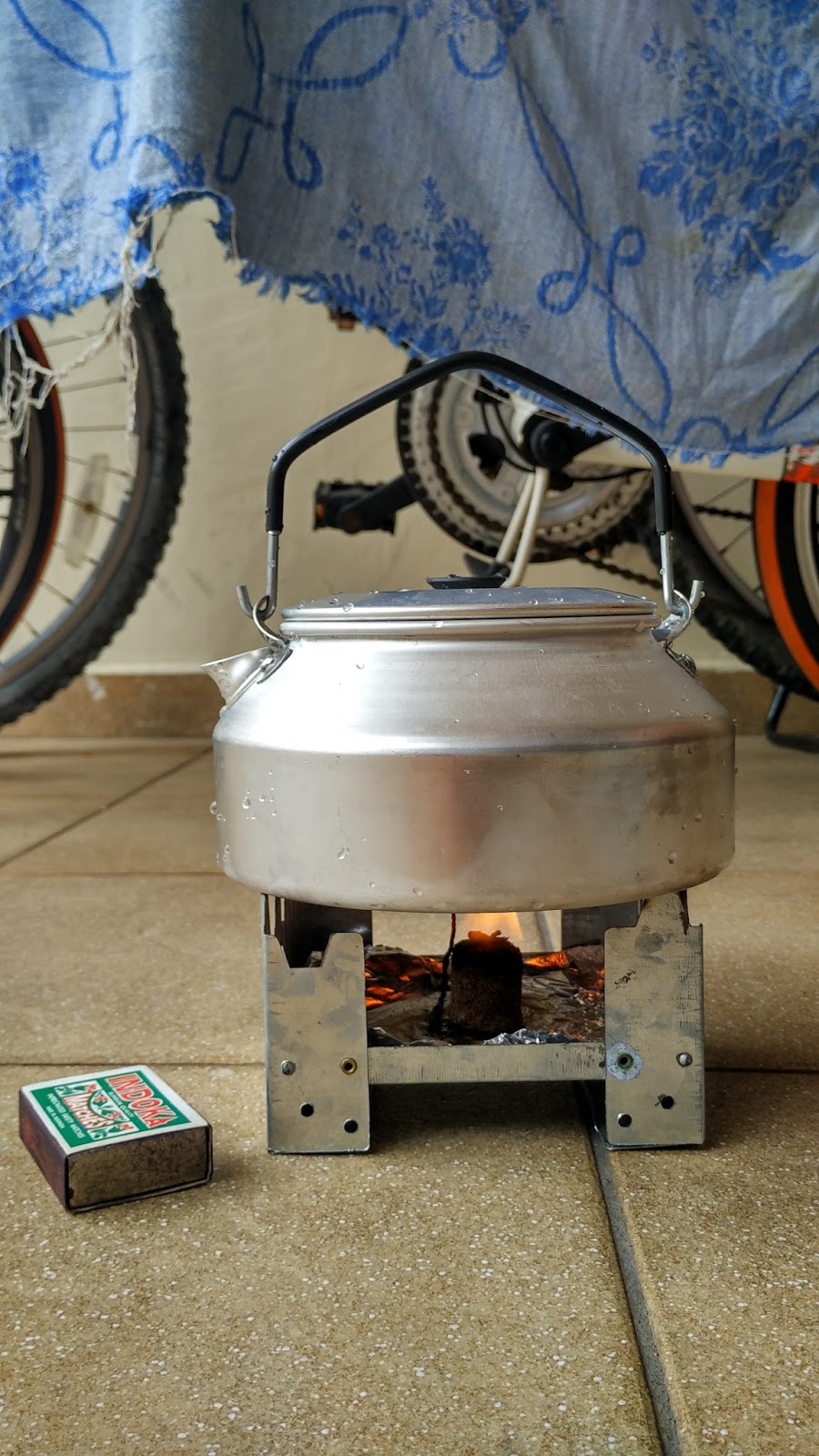
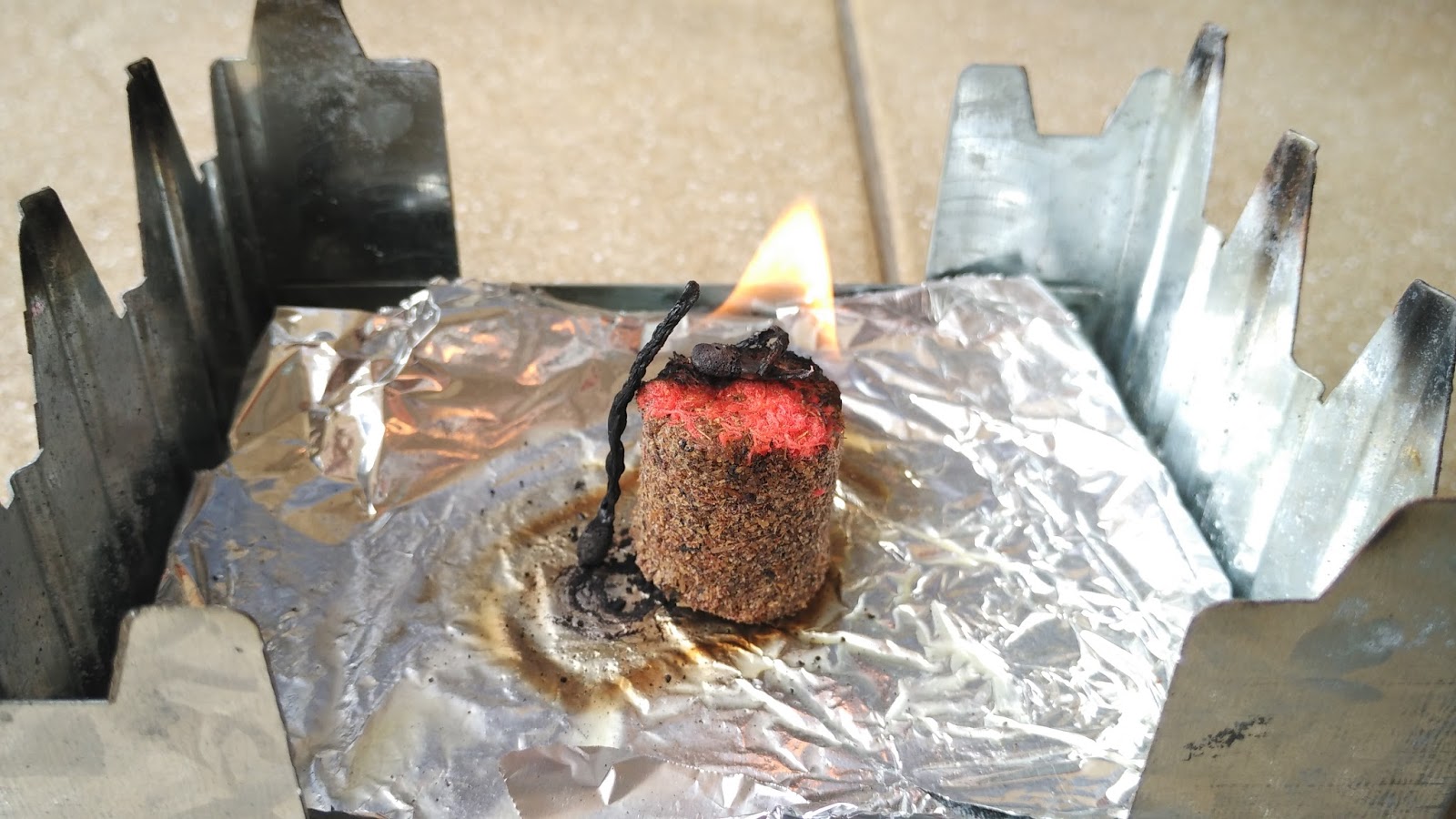
I had a box of fire starters lying around and the thought occurred to me that this may serve as a good alternative fuel for my solid fuel stove. These are generic fire starters that can be easily obtained in most supermarkets and cost about $1.40 for a box of 40 cylindrical fire starters.
They are made out of two layers, the top consisting of a thin bedding of cotton fibers dyed with red (wax?) that catches fire easily while the bottom layer is made out of compressed fine wood shavings.
When used as a what is intended to, a single cylinder of fire starter will take about 10 minutes to properly light up enough charcoal for a small sized barbecue pit. The way you stack up the charcoal should allow enough air for effective combustion and to make sure most, if not all the charcoal are directly on top of the flame. I shall talk about stacking methods another time.
I like the fact that these generic fire starters light up easily with a match, unlike the solid fuel . Just hold the match near to the sides of the red tinder layer and off it goes!
Using my Trangia 0.9l kettle, I wanted to test if a single fire starter is sufficient to boil the kettle of water. Unfortunately, it could not and I had to add another piece of fire starter. By then, almost 15min had elapsed. The flame also produced a very thick layer of soot underneath the kettle, in the same way solid fuel does.
Even the 2nd fire stater did not get the water to boil. By the time bubbles were forming at the bottom of the kettle, the fire starter was extinguished.
Hey, I still needed hot water, so I decided to supplemented the stove with some small chunks of solid fuel. After a short minute or two, the water reached a good rolling boil. The flame from the solid fuel is a lot less smokey and seemed to burn a lot hotter than the fire starter.
By now, the kettle is so sooty that I could scratch out my name on the sidewalls. Soot and smoke is an indication that the flame is not efficient, leaving behind fuel in the form of smoke and soot in the process.
Not only that, the fire starters left behind a huge pile of ash, which is yet more unburnt fuel.
In a pinch, it is possible to use fire starters as an alternative to solid fuel, but be prepared to use more fire starters to accomplish the same task and be patient.
It is not an efficient burn. But it may be due to the fact that the composition of the fire starter may be more suitable for starting charcoal because as the charcoal heats up, it reflects heat back onto the fire starter, possibly reaching a high enough temperature to ignite the smoke from the fire starter, which is why the smoke from a fire starter disappears after a while when used to light up charcoal.
Price wise, solid fuel (sometimes known as hexamine blocks or Esbit cubes) can be rather expensive in other countries, which makes sense to use alternative fuels for lightweight camping needs. In Singapore, solid fuel is a very low cost camping fuel as it is a standard issue in the army ration pack. Given the economy of scale, a box of 8 large solid fuel blocks sells for as little as $1.40.
Tuesday, November 17, 2015
5 Must Have Items to Bring to Camp Growl - Ex Wallaby 2015
So, I returned from a 16-day reservist in Australia for Ex Wallaby this year. This was a rather different experience my previous trip there almost a decade ago since it was a really long time ago too!
Now that I am back in the comforts of my own home and writing my blog, it would be great for me to pen down my own thoughts about my accommodation in Camp Growl and share some thoughts about how to make your stay in this faraway camp a little more comfortable...
... Because the last time I was there, I did not expect myself to be heading there again in my entire life and did not write a small note to remind myself of how I could have made my stay better
Really, its the extra items aren't in the packing list that can greatly improve your experience in Camp Growl!
1. Pre-paid SIM card / Data Roaming Add-on
Being someone who checks emails, messages and social media umpteen times a day, it is quite difficult to truly put aside my mobile phone for 2-3 weeks. I suspect you'll feel the same too. There are several ways to stay connected to your loved ones at home.
Check your mobile provider for roaming data plans for Australia. For my trip, I found that Singtel had an offer for a monthly 1GB plan for a small price of $10. This 1GB is probably enough since there is limited time to surf data intensive apps such as youtube. Alternatively, you can choose to buy a prepaid mobile SIM card from Telstra or Optus.
But wait, you should know that you are in a forested area and mobile signal will be non-existent most of the time. You may need to ask around to know where are the best spots to receive the signals. Really then, the only time you will be able to use your phone is when you are out in town for R&R.
Some people would decide give up on using the mobile phone altogether during their time in Camp Growl. But fear not, that doesn't mean that all is lost. The camp has kindly provided an internet cafe or sorts, albeit with limited number of computers and slow internet speed, you may not always get a chance at the computers. There are more than adequate phones (wired ones, mind you) that allow the use of IDD calling cards and they are often vacant. I suspect that not many people would use the phones due to the lack of privacy and the fact that thats not how we roll anymore.
2. Power and Electricity - a big ass powerbank, multi head adapter and an Australian power adapter
Electrical energy is probably one of the most valued commodity by Camp Growl residents. Although electricity is abundant in the camp, they aren't available for your use!
Despite the lack of mobile signal, your phone or entertainment device is going to well used while you wait for time to pass. Unless you are extremely extroverted and can talk with your bunkmates for hours, it is seriously boring in Camp Growl!
A decent sized powerbank can let you charge your phone conveniently by your safari bedside as you would at home. Lying on the bed and playing games on your phone is one of the greatest luxuries you can have in the camp down under. For me, I brought my Xiaomi 16000mAh powerbeast. Its huge capacity means that I could charge my phone at least several times before the powerbank is depleted. Another nice feature is that it can pull in up to 2.0A of electrical current to charge up its huge ass batteries, making it possible to charge it back up in approximately 7 hours. It isn't exactly the fastest charging but it is rather fast for such a huge powerbank. Just make sure that your charger is capable of delivering such high current!
Whoa wait! Where do we charge our phones bruh? The only place to charge your devices is at the canteen. If you are lucky, you may get a free socket to charge from. Usually, it is full because the times when most people are free are also the times that you are free. One way to guarantee your access to a bring a multi head adapter or extension. It is worth the extra weight.
3. Daiso Heat Packs!
The daily temperature cycle in Camp Growl can be rather drastic. It can get really cold in the night and excruciatingly hot after sunrise. You'll need to prepare for that if you are going during Aug - early Oct. The temperature changes are less drastic as Australia approaches a full blown summer from early Nov-Dec.
Occasional drizzles and wind will add further chill factor to the already cold nights.
There is not much you can do if you were out in the forest for an exercise, however, if you are fortunate enough to be resting in camp, you can bring heat packs from Daiso to keep your sleeping bag warm and comfortable. These heat packs from Daiso come in 2 versions, one with an adhesive (body warmer) and another without (hand warmer).
I found them very value for money as no other brands so much as 6 hand warmer sachets for $2. They are said to last 8 hours and you can pause the heat production midway by simply putting the opened heat pack into a ziplock bag and wait till the remaining air inside the bag is used up.
To be safe, allocate 1 heat pack for every night. Having a heat pack inside your standard issue sleeping bag will keep you warm and toasty even in the coldest of Wallaby nights.
4. Sunscreen lotion
This may or may not be inside your packing list. But sunscreen lotion is an absolute necessity in the UV bathed Australia. Unless you want to be on KFC's extra crispy meal, apply your sunscreen generously!
5. Detergent, clothes hangers and pegs
These are easily forgotten from most packing lists. Mine did not state the need to bring any! Luckily, the old birds were kind enough to inform us newbies to pack some. The need for detergent is self-explanatory. Washing clothes inside the toilet while being completely naked is a very normal thing. Having detergent helps to clean your clothes the way your parents expect them to be. But do refrain from using too much as the soap suds will form considerably and will require several rinses before your clothes are free from detergent.
It is easy to wash clothes and dry them quickly thanks to the extremely dry wind and strong mid-day heat. At the same time, it is also easy to lose your clothing to the wind if it is not properly secured. Having clothes hangers and pegs will prevent the need to be overly creative about where you can secure your clothes to.
Now that I am back in the comforts of my own home and writing my blog, it would be great for me to pen down my own thoughts about my accommodation in Camp Growl and share some thoughts about how to make your stay in this faraway camp a little more comfortable...
... Because the last time I was there, I did not expect myself to be heading there again in my entire life and did not write a small note to remind myself of how I could have made my stay better
Really, its the extra items aren't in the packing list that can greatly improve your experience in Camp Growl!
1. Pre-paid SIM card / Data Roaming Add-on
Being someone who checks emails, messages and social media umpteen times a day, it is quite difficult to truly put aside my mobile phone for 2-3 weeks. I suspect you'll feel the same too. There are several ways to stay connected to your loved ones at home.
Check your mobile provider for roaming data plans for Australia. For my trip, I found that Singtel had an offer for a monthly 1GB plan for a small price of $10. This 1GB is probably enough since there is limited time to surf data intensive apps such as youtube. Alternatively, you can choose to buy a prepaid mobile SIM card from Telstra or Optus.
But wait, you should know that you are in a forested area and mobile signal will be non-existent most of the time. You may need to ask around to know where are the best spots to receive the signals. Really then, the only time you will be able to use your phone is when you are out in town for R&R.
Some people would decide give up on using the mobile phone altogether during their time in Camp Growl. But fear not, that doesn't mean that all is lost. The camp has kindly provided an internet cafe or sorts, albeit with limited number of computers and slow internet speed, you may not always get a chance at the computers. There are more than adequate phones (wired ones, mind you) that allow the use of IDD calling cards and they are often vacant. I suspect that not many people would use the phones due to the lack of privacy and the fact that thats not how we roll anymore.
2. Power and Electricity - a big ass powerbank, multi head adapter and an Australian power adapter
Electrical energy is probably one of the most valued commodity by Camp Growl residents. Although electricity is abundant in the camp, they aren't available for your use!
Despite the lack of mobile signal, your phone or entertainment device is going to well used while you wait for time to pass. Unless you are extremely extroverted and can talk with your bunkmates for hours, it is seriously boring in Camp Growl!
A decent sized powerbank can let you charge your phone conveniently by your safari bedside as you would at home. Lying on the bed and playing games on your phone is one of the greatest luxuries you can have in the camp down under. For me, I brought my Xiaomi 16000mAh powerbeast. Its huge capacity means that I could charge my phone at least several times before the powerbank is depleted. Another nice feature is that it can pull in up to 2.0A of electrical current to charge up its huge ass batteries, making it possible to charge it back up in approximately 7 hours. It isn't exactly the fastest charging but it is rather fast for such a huge powerbank. Just make sure that your charger is capable of delivering such high current!
Whoa wait! Where do we charge our phones bruh? The only place to charge your devices is at the canteen. If you are lucky, you may get a free socket to charge from. Usually, it is full because the times when most people are free are also the times that you are free. One way to guarantee your access to a bring a multi head adapter or extension. It is worth the extra weight.
3. Daiso Heat Packs!
The daily temperature cycle in Camp Growl can be rather drastic. It can get really cold in the night and excruciatingly hot after sunrise. You'll need to prepare for that if you are going during Aug - early Oct. The temperature changes are less drastic as Australia approaches a full blown summer from early Nov-Dec.
Occasional drizzles and wind will add further chill factor to the already cold nights.
There is not much you can do if you were out in the forest for an exercise, however, if you are fortunate enough to be resting in camp, you can bring heat packs from Daiso to keep your sleeping bag warm and comfortable. These heat packs from Daiso come in 2 versions, one with an adhesive (body warmer) and another without (hand warmer).
I found them very value for money as no other brands so much as 6 hand warmer sachets for $2. They are said to last 8 hours and you can pause the heat production midway by simply putting the opened heat pack into a ziplock bag and wait till the remaining air inside the bag is used up.
To be safe, allocate 1 heat pack for every night. Having a heat pack inside your standard issue sleeping bag will keep you warm and toasty even in the coldest of Wallaby nights.
4. Sunscreen lotion
This may or may not be inside your packing list. But sunscreen lotion is an absolute necessity in the UV bathed Australia. Unless you want to be on KFC's extra crispy meal, apply your sunscreen generously!
5. Detergent, clothes hangers and pegs
These are easily forgotten from most packing lists. Mine did not state the need to bring any! Luckily, the old birds were kind enough to inform us newbies to pack some. The need for detergent is self-explanatory. Washing clothes inside the toilet while being completely naked is a very normal thing. Having detergent helps to clean your clothes the way your parents expect them to be. But do refrain from using too much as the soap suds will form considerably and will require several rinses before your clothes are free from detergent.
It is easy to wash clothes and dry them quickly thanks to the extremely dry wind and strong mid-day heat. At the same time, it is also easy to lose your clothing to the wind if it is not properly secured. Having clothes hangers and pegs will prevent the need to be overly creative about where you can secure your clothes to.
Tuesday, September 01, 2015
Mosquito coil holder for camping and more
One of my pet peeves about going outdoors is the presence of mosquitoes. These pesky bloodsucker not only annoy and cause itch, they also carry diseases that can seriously ruin the picturesque vacation that you had been planning for so long.
There are many insect repellent products out there. So many brands of mosquito patches and sprays that promises hours of protection but they don't always seem to work well. Sometimes, a hot afternoon in the outdoors will have the spray washed off by your perspiration. Mosquito patches offer only a localized effect depending where exactly you stick them on.
There are times I wished I brought insecticide instead of the mild mosquito spray. To be fair, I really like the army insect repellent in the green tube. It had worked the best so far but it is quite harsh on the skin and gives a burning sensation when applied to more sensitive areas such as the neck. Hell, it even melted the plastic off my old Nokia phone. Definitely not something I will wanna use too often.
In comes mosquito coils. We generally picture these smouldering by a corner of a room or beside a tent to help drive away irritating bugs. No one will be daft enough to want to light one up and carry around with them. But wait, it is possible to carry a lighted mosquito coil around with you if you use a mosquito coil holder. It not only keeps the smouldering coil away from contact, it also stores the ash within the holder.
This is how it is. An inner mesh that keeps the smouldering coil from touching the metal parts of the holder.
I can foresee using this mosquito coil in many instances and I will definitely bring it out on my next vacation.
There are many insect repellent products out there. So many brands of mosquito patches and sprays that promises hours of protection but they don't always seem to work well. Sometimes, a hot afternoon in the outdoors will have the spray washed off by your perspiration. Mosquito patches offer only a localized effect depending where exactly you stick them on.
There are times I wished I brought insecticide instead of the mild mosquito spray. To be fair, I really like the army insect repellent in the green tube. It had worked the best so far but it is quite harsh on the skin and gives a burning sensation when applied to more sensitive areas such as the neck. Hell, it even melted the plastic off my old Nokia phone. Definitely not something I will wanna use too often.
Yep, you can even hook it on your jeans
In comes mosquito coils. We generally picture these smouldering by a corner of a room or beside a tent to help drive away irritating bugs. No one will be daft enough to want to light one up and carry around with them. But wait, it is possible to carry a lighted mosquito coil around with you if you use a mosquito coil holder. It not only keeps the smouldering coil away from contact, it also stores the ash within the holder.
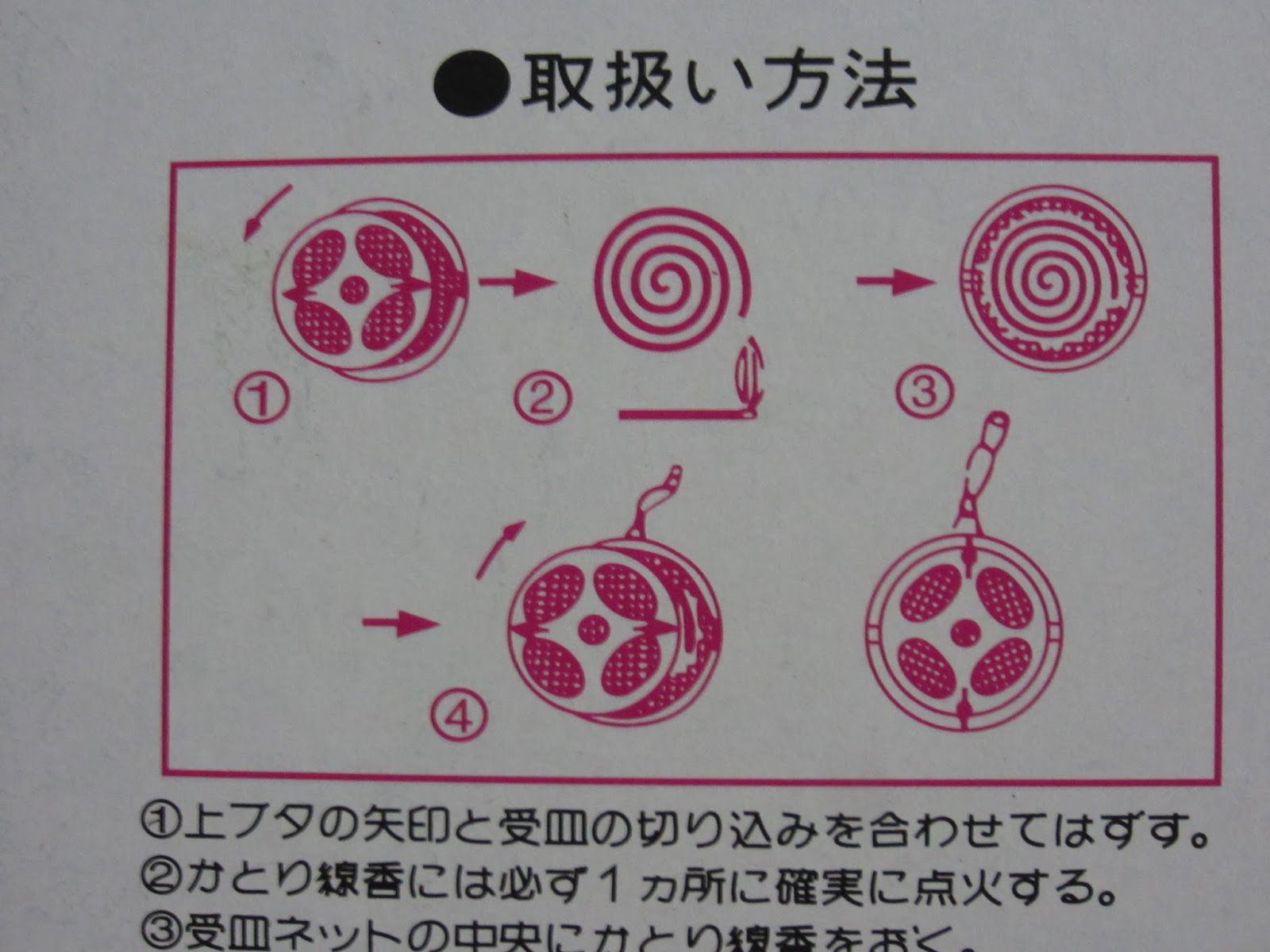
Just in case you didn't know how to use it
Many uses for this little thing
To separate the the two pieces, you first unhinge the clip.
And then turn the top piece till the arrow lines up with the notch to release the top piece
After you separate the pieces, the mosquito coil goes between the two nylon mesh which holds it in place.
You will have to light it up before you place it between the mesh
Here is a close up of the nylon mesh. I presume they it should be able to resist disintegrating due to the heat from the smouldering coil.
Tada, an enclosure that keeps the hot part fairly secure. The locking mechanism is easy to use and sturdy. It won't pop loose and have the mosquito coil burn you.
Here is a simple hook that you can clip to your belt or hang it on another hook.
I can foresee using this mosquito coil in many instances and I will definitely bring it out on my next vacation.
Subscribe to:
Comments (Atom)